
Operating a business in a Canadian National Park is fundamentally about stewardship, not just commerce; your success hinges on aligning with Parks Canada’s mandate for ecological integrity.
- Compliance is non-negotiable, from housing staff under a “need to reside” clause to implementing certified bear-proof waste systems.
- Environmental impact assessments are rigorous, requiring detailed mitigation plans for wildlife and mandatory Indigenous consultation.
Recommendation: Shift your mindset from ‘obtaining a permit’ to ‘earning the privilege’ to operate as a custodian of a national treasure.
The prospect of operating a business against the iconic backdrop of the Canadian Rockies is a powerful draw. Entrepreneurs envision their tour company, hotel, or restaurant thriving amidst the unparalleled beauty of Banff or Jasper National Parks. However, many approach this opportunity with a conventional business mindset, believing that securing a license is merely a matter of navigating standard municipal bureaucracy. This is the first and most fundamental mistake. Operating within these protected spaces is not a right; it is a conditional privilege granted by Parks Canada.
The entire framework is built on a single, non-negotiable principle: ecological integrity comes first. Unlike in any other jurisdiction, your business plan will be scrutinized not just for its economic viability, but for its role as a partner in conservation. The process extends far beyond a simple application form. It involves rigorous assessments of your impact on wildlife, your strategies for managing waste in a sensitive ecosystem, and your solutions for housing staff in communities with extreme residential pressures. Generic claims of being “eco-friendly” are insufficient; proof, process, and third-party certification are the currency of trust.
This guide provides an official perspective on what it truly takes to earn and maintain a business license in these national treasures. We will deconstruct the core requirements, moving from the foundational residency rules to the complexities of impact assessments, accommodation permits, and waste management protocols. Finally, we will explore how to build an authentic eco-tourism brand that aligns with the stewardship mandate, ensuring your business becomes a valued part of the park’s ecosystem, not a threat to it.
This article details the essential regulatory and environmental considerations for any prospective operator. The following summary outlines the critical steps and mindset required to successfully launch and run a business within Canada’s flagship national parks.
Summary: Operating a Business in Banff or Jasper National Park
- Why You Cannot Just Buy a House in Banff if You Don’t Work There?
- How to Pass a Detailed Impact Assessment for a New Tour Route?
- Fixed-Roofed Accommodation vs. Glamping: Which Permit is Harder to Get?
- The Waste Management Oversight That Gets Your Business Fined or Closed
- How to House Staff in Park Communities with 0% Vacancy Rates?
- How to Manage Shipping Costs When Serving Remote Northern Communities?
- Why Self-Declared “Eco-Friendly” Claims No Longer Convince Travelers?
- Building an Eco-Tourism Brand: How to Achieve GreenStep or Biosphere Certification?
Why You Cannot Just Buy a House in Banff if You Don’t Work There?
The first barrier to entry for many aspiring entrepreneurs is the “need-to-reside” requirement, a foundational policy that shapes the very fabric of park communities. This is not a suggestion; it is a legal constraint. In Banff, 100% of property owners must meet eligible resident criteria, meaning they must be primarily employed or operate a business within the park. This regulation is designed to prevent these unique towns from becoming exclusive resort communities for the wealthy, ensuring they remain vibrant places for those who live and work to support the visitor experience and conservation efforts.
This has profound implications for your business. If you plan to be an owner-operator living in the park, you must prove your business is your primary source of income. This regulation effectively prohibits the ownership of property for passive investment or as a secondary vacation home. Furthermore, it heavily restricts the short-term rental market, making business models reliant on platforms like Airbnb extremely difficult, if not impossible, to operate legally within town boundaries.
For small home-based businesses, the process involves an additional layer of approval. Before you can even apply for a business license from the Town of Banff, you must first secure a Home Occupation Development Permit. This permit scrutinizes the nature of your business to ensure it does not disrupt the residential character of the community. It is the first of many demonstrations that your business must fit within the park’s community structure, not the other way around.
How to Pass a Detailed Impact Assessment for a New Tour Route?
If your business involves activities on the land, such as guided hikes, wildlife tours, or paddling excursions, the Detailed Impact Assessment (DIA) is the most critical hurdle. This is where Parks Canada evaluates your proposal against its core stewardship mandate. A vague commitment to “leave no trace” is insufficient. You must provide a granular, evidence-based plan that demonstrates a deep understanding of the park’s ecological sensitivities and outlines concrete mitigation strategies. This process is not a formality; it is the primary mechanism for protecting the park’s ecological integrity.
The application requires exhaustive detail. Insufficient information is one of the most common reasons for rejection. You must clearly define your proposed routes, group sizes, frequency of use, and the specific activities you will conduct. Central to the assessment is your plan to mitigate disruption to wildlife and their habitats. This is particularly crucial for sensitive species like grizzly bears and caribou, whose movement corridors are paramount.

Furthermore, Indigenous consultation is an integral part of the process. Parks Canada maintains partnership opportunities with Treaty 7 nations for Banff and Treaty 6 & 8 nations for Jasper. Your application must consider and respect these relationships, demonstrating how your operation can coexist with and support Indigenous connections to the land. A failure to provide a comprehensive, detailed, and respectful application will result in its refusal. The burden of proof is entirely on the applicant to demonstrate their value as a responsible steward.
Fixed-Roofed Accommodation vs. Glamping: Which Permit is Harder to Get?
For entrepreneurs in the accommodation sector, the type of structure you propose has significant implications for the permitting process. While both fixed-roofed buildings (hotels, lodges) and “glamping” (luxury tents, yurts) require extensive review, the latter often faces a more complex and lengthy path to approval. The primary reason is the element of precedent risk; fixed-roofed accommodations follow established protocols, whereas glamping is often a novel concept in a given area, requiring a more cautious, pilot-phase approach from Parks Canada.
As Parks Canada states, its authority is absolute in setting the terms of operation. The Superintendent’s power is a key factor to remember, as outlined in their official guidance on business licensing:
The Superintendent may impose conditions on a business licence including details about hours of operation, equipment requirements, health, safety and environmental protection requirements, and conditions necessary for the protection of natural or cultural resources.
– Parks Canada, How to apply for a business licence in a national park
This discretionary power means that even if a permit is granted, it comes with strict, enforceable conditions. For glamping, these conditions are often more stringent due to the higher perceived risk to wildlife and the challenges of remote utility servicing.
The following table, based on common permitting challenges, illustrates why a glamping permit can be more difficult to secure, despite a lower initial capital investment.
| Criteria | Fixed-Roofed Accommodation | Glamping |
|---|---|---|
| Precedent Risk | Low (established) | High (novel concept) |
| Environmental Impact | Moderate (permanent structure) | Variable (seasonal setup) |
| Water/Sewage Requirements | Municipal connection available | Often deal-breaker for remote sites |
| Wildlife Management | Established protocols | Higher risk assessment needed |
| Approval Timeline | 6-12 months | 12-18 months (pilot phase) |
| Capital Investment | Higher CapEx | Lower CapEx |
| Lease Stability | Long-term (10-42 years) | Often shorter, renewable |
The Waste Management Oversight That Gets Your Business Fined or Closed
Nowhere is the stewardship mandate more tangible than in the area of waste management. Improper handling of food waste and other wildlife attractants is one of the fastest ways to incur significant fines, operational restrictions, or even the revocation of your business license. This is not a minor compliance issue; it is a direct threat to both human safety and wildlife health. A single bear that becomes food-conditioned due to unsecured garbage can create a dangerous conflict that often ends with the animal’s destruction. Parks Canada’s enforcement of these protocols is, therefore, absolute and uncompromising.
Violations of these critical protocols are taken very seriously. As seen in numerous enforcement actions handled by the Jasper Realty office, which oversees permit compliance, even minor infractions can lead to immediate penalties. The responsibility lies with the business to implement and maintain foolproof systems. This includes using certified bear-proof bins, managing grease traps, and rigorously training all staff on these non-negotiable procedures. Maintaining detailed logs for inspection is not optional; it is a required part of your operational duty.
To operate successfully, your business must adopt a zero-tolerance policy for attractant mismanagement. The following checklist outlines the minimum requirements for a compliant waste management system within a national park.
Your Action Plan: Bear-Proof Waste Management Protocol
- Install certified bear-proof bins that meet stringent Parks Canada specifications.
- Schedule all waste and recycling collection to occur outside of peak wildlife activity hours, specifically avoiding dawn and dusk.
- Implement and document strict grease trap cleaning protocols with a certified disposal service.
- Conduct mandatory, recurring training for all staff on wildlife attractant management and emergency encounter procedures.
- Maintain meticulous, up-to-date waste management logs, ready for unannounced inspection by Parks Canada personnel at any time.
How to House Staff in Park Communities with 0% Vacancy Rates?
Beyond ecological stewardship, a major operational challenge for any business in Banff or Jasper is securing staff accommodation. The same “need-to-reside” clause that restricts property ownership also contributes to an extremely tight housing market. In peak season, the rental market effectively operates at a 0% vacancy rate, according to the Municipality of Jasper. This is not a market fluctuation; it is a chronic structural crisis. A business cannot function without staff, and staff cannot work if they have nowhere to live. Therefore, your business plan is incomplete without a concrete, viable staff housing strategy.
Simply offering a competitive wage is no longer sufficient. Proactive and innovative businesses are the ones that succeed. These operators understand that providing housing is a core business cost, not a peripheral perk. Strategies include master-leasing entire properties in nearby towns like Hinton for Jasper-based staff, co-investing with other businesses to build or acquire housing stock, or implementing modern, high-density solutions like modular housing. The Municipality of Jasper provides guidance on the planning process for such developments, but the onus is on the business to initiate and fund these solutions.
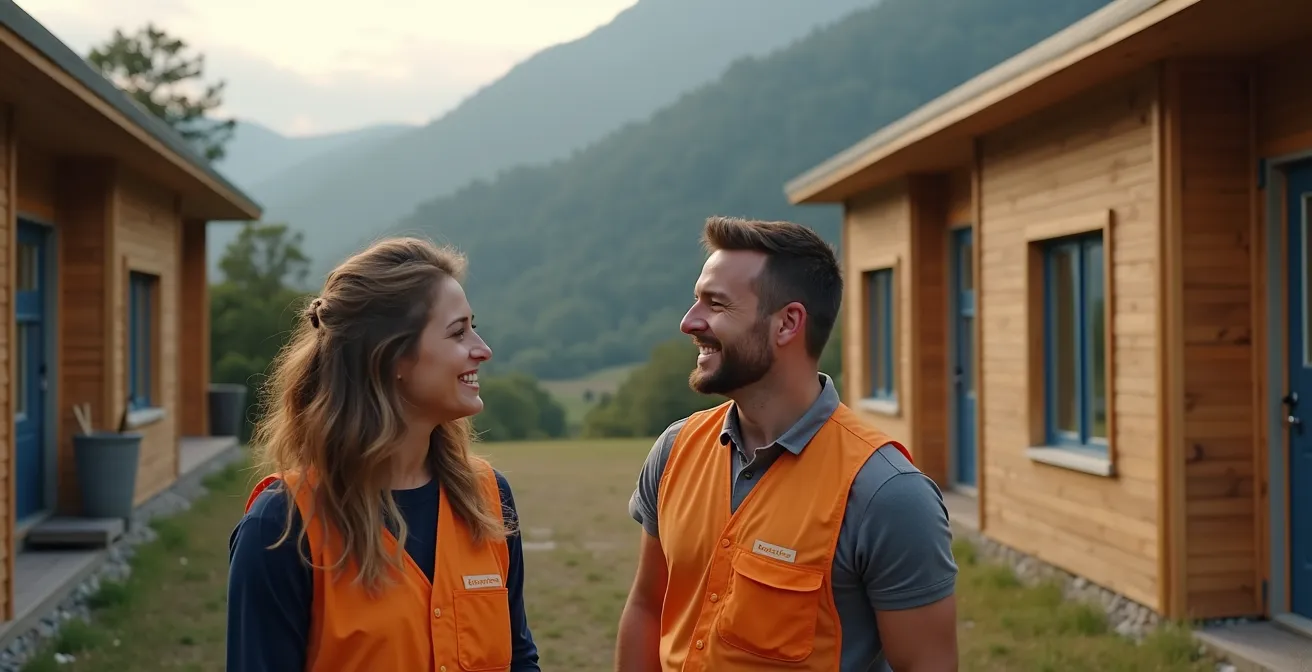
This housing crisis serves as another filter, testing the long-term commitment and financial viability of an enterprise. A business that fails to plan for staff accommodation is a business that is destined to fail due to chronic understaffing and high turnover. Parks Canada and the park municipalities view a robust housing plan as a key indicator of a well-managed, sustainable operation that contributes positively to the community rather than exacerbating its pressures.
How to Manage Shipping Costs When Serving Remote Northern Communities?
For businesses operating in or supplying the more remote areas of Canada’s national parks, particularly in the north, logistics and shipping costs present a significant operational hurdle. The “last mile” of delivery can be prohibitively expensive and subject to extreme seasonal variability. A failure to develop a sophisticated logistics strategy can erode profit margins and compromise service delivery. This requires a deep understanding of unique Canadian shipping infrastructure, including seasonal ice roads and subsidized government programs.
A multi-modal approach is essential. During the summer, ground and air freight are the primary options, but they come at a premium. In the winter, the calculus changes entirely. Ice roads, while subject to weather dependency, often become the most cost-effective method for transporting bulk goods. Strategic planning involves stockpiling non-perishable goods during these low-cost windows. Furthermore, operators must leverage federal programs designed to mitigate these costs, such as Canada Post’s Air Stage Parcel Service and the Nutrition North Canada subsidies for eligible goods and communities. Partnering with local Indigenous businesses through the Procurement Strategy for Aboriginal Business (PSAB) can also open up new logistical efficiencies and community benefits.
The following table provides a simplified analysis of how seasonality impacts shipping options and costs, a critical consideration for any remote operator’s budget.
| Season | Ground Shipping | Air Cargo | Ice Road |
|---|---|---|---|
| Summer (Jun-Aug) | Standard rates | Premium rates | Not available |
| Fall (Sep-Nov) | Weather delays possible | Most reliable | Not available |
| Winter (Dec-Feb) | Weather dependent | Weather delays | Most cost-effective |
| Spring (Mar-May) | Breakup restrictions | Most reliable | Limited availability |
Why Self-Declared “Eco-Friendly” Claims No Longer Convince Travelers?
In the past, simply labeling a business “eco-friendly” or “green” was a sufficient marketing strategy. Today’s visitor, and more importantly, Parks Canada, demands substance over slogans. The prevalence of “greenwashing”—making unsubstantiated environmental claims—has created a highly skeptical market. This skepticism is so pronounced that it has led to a related phenomenon known as “green-hushing.”
This concept, noted in official Parks Canada planning documents, is critical for any modern operator to understand.
Greenwashing concerns have led to a phenomenon of ‘green-hushing’ where genuinely sustainable businesses hesitate to make environmental claims without third-party certification.
– Parks Canada, Departmental plan for fiscal year 2024 to 2025
This means that unverified claims are not only ineffective, but they can also damage your credibility. The expectation is for verifiable proof of your environmental commitments. This aligns with federal oversight from bodies like the Competition Bureau of Canada, which has strict guidelines against vague or misleading environmental advertising. A claim like “we protect the park” is meaningless without a documented waste management system, a detailed water conservation plan, and measurable energy reduction targets. Your environmental commitment must be an auditable part of your operation, not a footnote in your marketing brochure.
For Parks Canada, your role is to help monitor visitation flow and ensure these protected places remain protected for generations. This requires a business model where environmental commitments are integrated and substantiated, not just declared. The modern eco-tourist is educated and discerning; they will choose the operator who can prove their dedication to the principles of conservation, making authentic sustainability a powerful competitive advantage.
Key Takeaways
- Operating a business in a national park is a privilege, not a right, governed by the principle of ecological integrity.
- Non-negotiable regulations, such as the “need-to-reside” clause and bear-proof waste management, are strictly enforced.
- Authenticity is paramount; unverified “eco-friendly” claims are ineffective and operators should pursue third-party certifications like GreenStep or Biosphere.
Building an Eco-Tourism Brand: How to Achieve GreenStep or Biosphere Certification?
The ultimate expression of the stewardship mandate is to move beyond mere compliance and achieve a recognized, third-party sustainability certification. Accreditations like GreenStep Sustainable Tourism or Biosphere Certification are the gold standard. They provide the verifiable proof that discerning travelers and Parks Canada demand, transforming your environmental commitment from a claim into a certified fact. This is not just about branding; it is about operational excellence and aligning your business with the long-term vision for Canada’s national parks.
Achieving these certifications is a rigorous process. It begins with a baseline environmental assessment, collecting hard data on your current water and energy consumption, waste output, and procurement policies. This data is then used to identify opportunities for efficiency and to set measurable reduction targets. The process often involves applying for Canadian green business grants to fund necessary upgrades to your infrastructure or operations. Finally, you must undergo a third-party audit to verify your systems and performance before certification is awarded. For operators in Banff, achieving GreenStep certification can lead to preferential listing on the influential Banff Lake Louise Tourism website, a significant commercial benefit.

This commitment to certified sustainability directly reflects Parks Canada’s own priorities. The agency’s departmental plan confirms a planned investment of $93.2 million in 2024-2025 for key projects supporting visitor experience and environmental protection. By pursuing certification, your business becomes an active, recognized partner in this national project. It is the most powerful way to demonstrate that you understand your role is not just to profit from the park, but to be a dedicated custodian of its future.
To begin this journey, you must first fundamentally shift your perspective. View every business decision through the lens of ecological integrity and begin the process of documenting your current practices to prepare for a baseline assessment. This is the first concrete step toward becoming a certified leader in sustainable tourism.