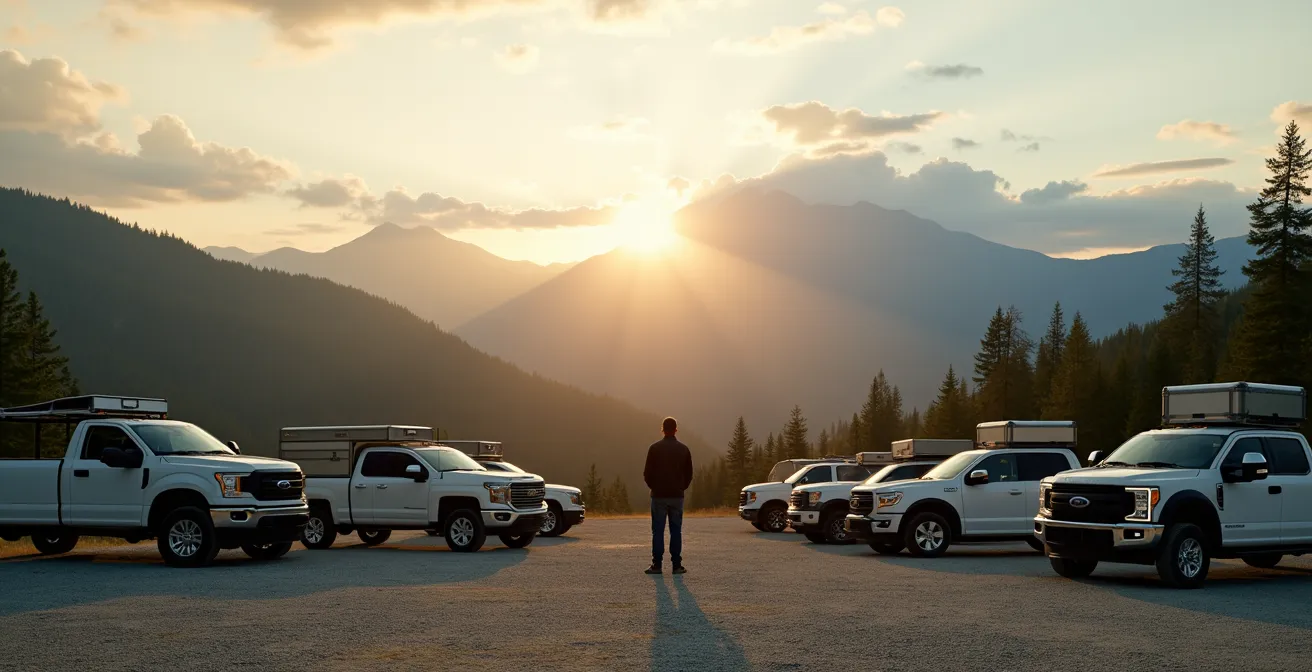
To attract major film productions, you must market your property not just on its beauty, but on its power to unlock millions in Canadian tax credits.
- Producers choose locations that maximize their tax incentives in provinces like British Columbia and Ontario.
- Your property’s logistical assets—like parking and power—are direct financial advantages for a production’s budget.
Recommendation: Start by creating a “Production-Ready Package” that documents your property’s specific financial and logistical advantages, proving its value to a location manager before they even visit.
The idea of seeing your property on the big screen is captivating. You might picture a Hollywood crew transforming your familiar landscape into a scene from a blockbuster movie. Many Canadian landowners believe that a stunning view or a unique building is all it takes. They spend time taking beautiful photos, hoping to catch a scout’s eye among thousands of listings. While aesthetics are a starting point, this approach misses the single most important factor driving the “Hollywood North” boom: the budget.
As a location scout, my primary job is not just to find a visually perfect spot, but to find a location that makes profound financial sense for the production. The real conversation isn’t about how beautiful your property is; it’s about how your property helps a producer leverage Canada’s lucrative, multi-layered tax credit system. Productions are drawn to British Columbia and Ontario not just for the scenery, but because the right location can slash millions off their bottom line. The secret isn’t just having a scenic landscape; it’s understanding and marketing your land’s role as a strategic financial asset.
This guide will shift your perspective from that of a landowner to that of a film producer. We will move beyond pretty pictures and delve into the logistical and financial realities that truly make a property desirable. You will learn how to analyze and present your property not as a simple backdrop, but as a key component in a complex financial equation, making it an irresistible choice for the next major production.
This article provides a comprehensive roadmap for transforming your property into a magnet for film productions. By understanding the financial incentives and logistical needs of the industry, you can strategically position your land as a top-tier location. The following sections will guide you through this process.
Summary: A Landowner’s Guide to Attracting Film Productions
- Why BC and Ontario Attract Productions Despite High Costs?
- How to Photograph Your Property to Catch a Location Manager’s Eye?
- Commercials vs. Feature Films: Which Disrupts Your Business Less?
- The Contract Clause That Protects You if a Film Crew Damages Your Property
- How to Provide “Base Camp” Parking for a 50-Truck Unit?
- Alberta vs. BC: Which Province Offers Better Tax Credits for Digital Media?
- Why a “Heritage Designation” Isn’t a Death Sentence for Development?
- Leveraging Local Economic Incentives: How to Access Municipal CIP Grants?
Why BC and Ontario Attract Productions Despite High Costs?
From a distance, it seems counterintuitive. Why would a multi-million dollar production choose to film in some of Canada’s most expensive provinces like British Columbia and Ontario? The answer is a powerful financial mechanism: stackable tax credits. These government incentives are so significant that they can make a seemingly expensive location far cheaper than a location in a US state with no credits. For a producer, the daily location fee is just one part of a much larger calculation.
The key is understanding the “Net Effective Cost.” A production doesn’t just pay your fee; they calculate what that fee costs them *after* receiving millions back from the government. Provinces are in a constant race to offer the most attractive incentives. For example, recent BC tax credit enhancements show a jump to a 36% credit on qualified labour expenditures starting in 2025. When combined with federal credits and regional bonuses, the savings become immense. This transforms your property from a cost centre into a tool for financial optimization.
This table illustrates how a higher-priced Canadian location becomes more cost-effective for a production than a cheaper US-based one, once tax credits are applied.
| Location | Base Location Fee | Tax Credit Rate | Net Effective Cost |
|---|---|---|---|
| British Columbia | $10,000/day | 36% PSTC + Federal | $4,700/day |
| US State (No Credits) | $8,000/day | 0% | $8,000/day |
| Ontario (All-Spend) | $9,000/day | 21.5% OPSTC | $7,065/day |
As a landowner, your marketing should reflect this reality. Highlighting that your property is located in a zone eligible for a regional uplift bonus (an extra 6-12.5% in BC or 10% in Northern Ontario) is often more compelling to a producer than simply lowering your daily rate. You are not just renting out land; you are providing access to a powerful financial incentive.
How to Photograph Your Property to Catch a Location Manager’s Eye?
In an industry where location libraries like Ontario Creates contain over 350,000 images, your property’s photos need to do more than just show a pretty view. They must function as a visual scouting report. A location manager isn’t just looking for beauty; they are assessing logistics, access, and potential. Your photography package should answer their practical questions before they’re even asked. Think less like a real estate agent and more like a logistics coordinator.
The goal is to create a “Production-Ready Package” that showcases your property’s entire logistical footprint. This means moving beyond simple snapshots of the main house. We need to see the “Financial Topography” of your land: the wide-open fields perfect for a base camp, the gravel road that can support heavy trucks, and the exact location of power hookups. An aerial view is not just for show; it’s a strategic map of your assets.
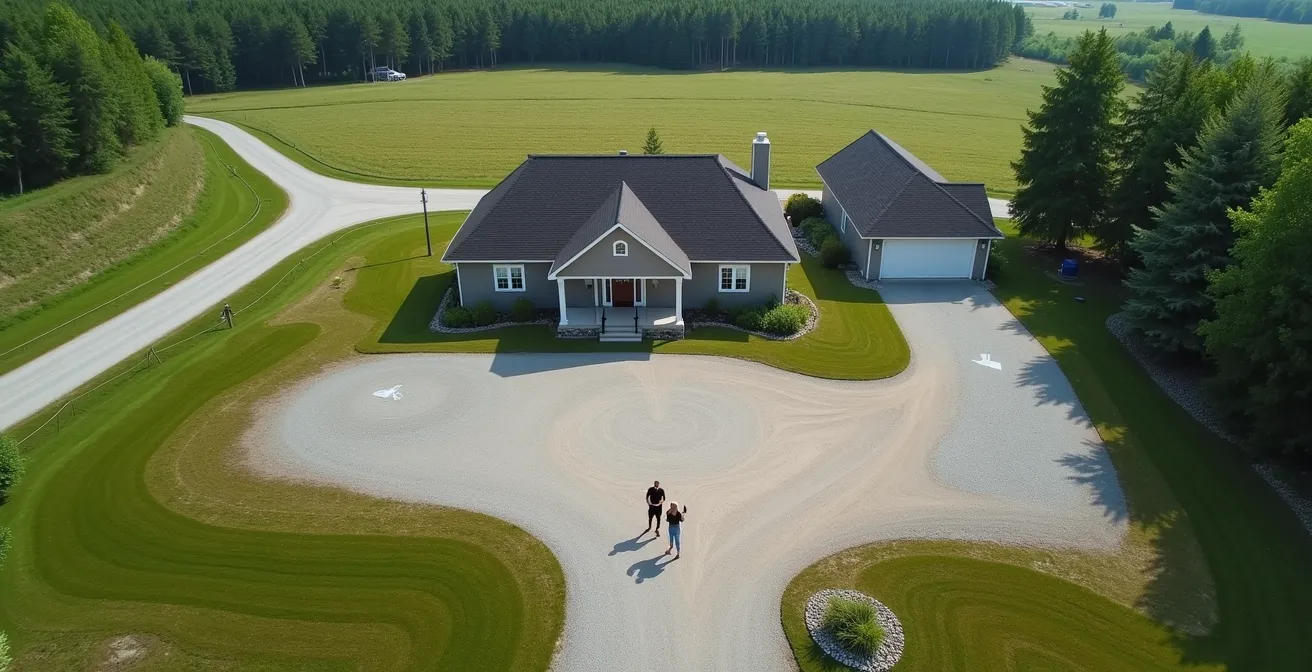
This overhead perspective allows a location manager to instantly visualize where to stage equipment, park the unit, and set up shots. It’s about demonstrating that your property can handle the immense operational scale of a film production. Your photo gallery should be a visual inventory of every logistical advantage you offer, from hard-standing areas to unique architectural details that could fit a specific period.
Your Visual Scouting Report Checklist: Essential Photography
- Capture wide establishing shots showing total acreage and access roads from multiple angles.
- Document existing power hookups, hard-standing areas, and covered storage spaces with clear photos.
- Photograph interior spaces with natural lighting at different times of day to show versatility.
- Include detail shots of unique architectural features or period-specific elements (e.g., specific window styles, original flooring).
- Create a visual inventory of parking capacity, demonstrating space for 50+ production vehicles if available.
Commercials vs. Feature Films: Which Disrupts Your Business Less?
The allure of a major feature film is strong, but the commitment is significant. A large production can occupy your property for weeks or even months, bringing a high level of activity and disruption. For many landowners, especially those running an active business like a farm or winery, a series of smaller, high-paying jobs like television commercials can be a more strategic and less disruptive source of revenue. The key is to understand the trade-offs in duration, daily rates, and disruption levels.
Commercials are surgical strikes: they are in and out in 1-3 days, typically pay a high daily rate, and have a smaller logistical footprint. Feature films and TV series offer longer-term income but require a much greater commitment of your space and time. Furthermore, the type of production can influence their eligibility for certain tax credits. For example, Canadian Content productions receive a 25% refundable tax credit on labour, making authentically Canadian locations more attractive for those specific projects, whether they are films or TV series.
Analyzing the potential income versus the impact on your daily operations is crucial. The following table breaks down the typical characteristics of different production types to help you decide which market to target.
| Production Type | Typical Duration | Daily Rate Range | Disruption Level | Tax Credit Access |
|---|---|---|---|---|
| TV Commercials | 1-3 days | $2,000-5,000 | Low | Limited federal credits |
| Feature Films | 5-30 days | $3,000-10,000 | High | Full PSTC/OPSTC access |
| TV Series | Multiple periods | $2,500-7,500 | Medium | Episodic credits available |
| Music Videos | 1-2 days | $1,500-4,000 | Low | Provincial only |
There is no single “best” type of production; the right choice depends on your property’s availability, your tolerance for disruption, and your financial goals. By understanding these differences, you can proactively market your property to the specific productions that are the best fit for you.
The Contract Clause That Protects You if a Film Crew Damages Your Property
The excitement of a film shoot can quickly fade if your property is left in disarray. While the vast majority of productions are professional and respectful, accidents happen. A solid location agreement is your single most important tool for protection. It moves beyond verbal assurances and establishes legally binding requirements for insurance, restoration, and payment. Your contract should be tailored to Canadian realities, anticipating everything from weather-related delays to specific provincial regulations.
The cornerstone of your protection is insurance. Before a single truck rolls onto your land, you must have a certificate of insurance in hand. As the official guidelines confirm, this is a non-negotiable industry standard.
Production companies must provide an insurance certificate that meets the minimum requirements set by the province’s film commission
– Creative BC Guidelines, British Columbia Film Commission Requirements
This typically means a minimum of $5 million in general liability coverage. But the contract must go further. A crucial clause to include is the “Location Wrap Report.” This provision withholds the final 10-15% of the location fee until you and a production representative have conducted a joint inspection and you have signed off that the property has been restored to its original condition. This gives you financial leverage to ensure any and all damages are addressed promptly.

Other essential clauses include defining Force Majeure terms specific to Canada, like forest fires or ice storms, specifying restoration requirements that match provincial heritage or environmental laws, and demanding 48-hour notice for any proposed structural or landscaping changes. A well-drafted contract transforms the relationship from one of hope to one of clear, enforceable expectations.
How to Provide “Base Camp” Parking for a 50-Truck Unit?
To a film production, a large, flat, accessible piece of land is pure gold. While you may see an empty field, a location manager sees a “base camp”—the logistical heart of the entire operation. This is where dozens of trucks and trailers for cast, crew, equipment, wardrobe, and catering will park. Providing this space on-site isn’t just a convenience; it’s a massive financial saving for the production that you can, and should, monetize.
Productions without on-site parking face significant costs and logistical headaches. For context, production companies typically spend up to $5,000/week just to rent an external parking lot for their base camp. This doesn’t even include the lost time and fuel costs of shuttling crew and equipment back and forth. When you offer 2-5 acres of usable, accessible land for parking, you are directly saving the production thousands of dollars and hours of logistical planning. This is a powerful bargaining chip.
Your “Production-Ready Package” must visually document this asset. This means providing photos and even a drone video of the potential base camp area, along with measurements and notes on ground composition (e.g., “firm gravel base, accessible in all weather”). You should highlight its proximity to the primary shooting locations on your property. The ideal base camp area has the following characteristics:
- Sufficient Space: A minimum of 2 acres for a medium-sized production, and up to 5 acres or more for a large feature film.
- Good Access: Roads must be wide enough and firm enough to handle large, heavy tractor-trailers.
- Level Ground: The area should be relatively flat to allow for safe parking and movement of vehicles.
- Separation from Set: Ideally, it is close enough for convenience but far enough away that the noise and activity do not interfere with sound recording.
By quantifying and marketing your parking capacity, you are no longer just offering a field; you are offering a solution to one of a production’s biggest logistical and financial challenges. This is a key part of marketing your property’s logistical footprint.
Alberta vs. BC: Which Province Offers Better Tax Credits for Digital Media?
While traditional filming gets much of the attention, the world of digital media—visual effects (VFX), animation, and post-production—is a massive and growing part of the industry. For properties with specific infrastructure, this opens a new and lucrative niche. Provinces like British Columbia, Alberta, and Ontario are competing fiercely for this work, and their tax credit structures reflect different strategies that can make your property more or less attractive depending on its location.
The key difference often lies in whether a province offers an “all-spend” model versus a “labour-only” credit, and how they handle bonuses for digital work. Alberta, for instance, offers a streamlined, all-spend credit of up to 30%, which can cover a wide range of costs. British Columbia, however, employs a strategy of “credit stacking”. As Creative BC highlights, this allows productions to combine multiple incentives for maximum savings.
A single production in BC can claim multiple credits: the base PSTC, a regional uplift, AND the Digital Animation or Visual Effects (DAVE) credit
– Creative BC, Film Incentive BC Guidelines 2025
This approach allows a production in BC to potentially stack a base credit, a regional bonus, and a 16% DAVE credit, reaching a total far exceeding Alberta’s cap. The choice for a producer depends on the specific nature of their spending.
| Province | Base Production Credit | Digital/VFX Bonus | Total Potential | All-Spend vs Labour |
|---|---|---|---|---|
| British Columbia | 36% (2025) | 16% DAVE credit | 52%+ | Labour only |
| Alberta | 25-30% | Included in base | 30% | All-spend eligible |
| Ontario | 21.5% OPSTC | 18% OCASE | 39.5% | Qualifying expenses |
To capitalize on this, a landowner must document their property’s digital-ready infrastructure. This includes high-speed internet, climate-controlled spaces for servers, and robust electrical capacity. Proximity to talent pools in Vancouver, Toronto, or Montreal is also a major selling point. By demonstrating you have the infrastructure, you make your property a viable option for high-tech production work.
Why a “Heritage Designation” Isn’t a Death Sentence for Development?
For many property owners, a “heritage designation” sounds like a restriction—a set of rules preventing any profitable use or modification. In the world of film production, however, this designation can be your most powerful marketing tool. Directors of period films are desperately seeking authenticity, and a designated heritage property guarantees a level of historical accuracy that is expensive and difficult to replicate on a soundstage.
Instead of a liability, your heritage status becomes a mark of premium production value. It signals to a location manager that your property offers something unique and valuable that can’t be easily found elsewhere. This is especially true for productions seeking to qualify for CanCon (Canadian Content) certification, which often favours authentic Canadian historical settings. You are not just offering a location; you are offering a piece of verifiable history.
Case Study: The Value of Authenticity
Winnipeg’s Exchange District National Historic Site is a prime example. Its perfectly preserved collection of 1880-1913 warehouse buildings made it the ideal stand-in for 1880s Kansas City in the feature film The Assassination of Jesse James by the Coward Robert Ford. The production was able to leverage the district’s authentic architecture to create a believable world, a feat that would have cost millions to build from scratch. This demonstrates how Canada’s historic places can perfectly meet a director’s vision while being more cost-effective than manufactured sets.
The strategy is to market the designation as a feature, not a bug. Your marketing materials should lean into the historical period your property represents. You can even create a synergy between film revenue and preservation by applying for heritage restoration grants simultaneously with seeking location fees. Productions are often willing to fund temporary, historically-accurate modifications (like changing signage or facade elements) as part of the location agreement, which can sometimes benefit the property long-term.
Key Takeaways
- Your property’s primary value is its ability to unlock provincial and federal tax credits for a production.
- Market your logistical assets (parking, power, access) as direct financial savings for a producer.
- A strong, Canadian-specific contract is your best protection against property damage and disputes.
Leveraging Local Economic Incentives: How to Access Municipal CIP Grants?
The final layer of the “credit stacking” strategy goes beyond the provincial level and down to the municipality. While provincial tax credits (PSTC, OPSTC) form the foundation, many local and regional governments offer their own incentives to attract film productions. These can take the form of direct grants, waiving of permit fees, or additional tax bonuses for filming outside of major urban cores. For a producer, every dollar counts, and these local perks can be the deciding factor between two otherwise similar properties.
These programs, often called Community Improvement Plans (CIPs) or similar economic development initiatives, are designed to stimulate local economies. Film production, with its large crews spending money on hotels, food, and local services, is a perfect target. For example, Ontario municipalities offer a 10% additional regional bonus for productions filming outside the Greater Toronto Area (GTA). This is a direct incentive for productions to look at properties like yours in regional areas.
The key is to do your homework. Contact your local municipal economic development office or film liaison office (if one exists). Ask specifically about incentives available for film and media production. Sometimes these aren’t widely advertised. By identifying these programs, you can add another compelling point to your “Production-Ready Package,” showing a producer that choosing your property comes with an extra layer of financial benefit directly from the local community.

This proactive approach demonstrates an unparalleled level of professionalism. You are not passively waiting to be discovered; you are actively building the most compelling financial case possible for your location. You are acting as a partner to the production, helping them maximize every available incentive from the federal level all the way down to your local town.
The next step is to assemble your “Production-Ready Package.” Start documenting your property’s financial and logistical assets today to position it as the clear and intelligent choice for the next big production scouting in your area.